Deposit Choices Shape Roulette Betting Flows on Digital Wheel Sites
Written by Finley Keller · Nov 2, 2026

Deposit Choices Shape Roulette Betting Flows on Digital Wheel Sites
Payment method selection plays a direct role in how players approach betting sequences on digital roulette platforms, and data from multiple jurisdictions shows clear patterns in these choices. E-wallet deposits often enable quicker top-ups compared with traditional bank transfers, which in turn supports shorter session intervals and more frequent stake adjustments during live wheel spins. Observers note that players using instant funding options tend to maintain consistent progression ladders, while those relying on slower clearance times adjust their sequences toward conservative single-step increases.
Payment Speed and Progression Patterns
Research from the Alcohol and Gaming Commission of Ontario indicates that platforms offering same-minute e-wallet credits record higher volumes of Martingale-style doubling after November 2026 updates to mobile interfaces. In contrast, credit card deposits that require additional authorization steps correlate with flatter betting curves, where users extend each round by smaller increments to preserve bankroll across extended play periods. Figures reveal that crypto-based funding, which settles in under thirty seconds on most regulated sites, aligns with aggressive recovery sequences after losses, particularly in jurisdictions that updated their digital payment rules earlier this year.
Regional Data Points
Across Australian markets, the Australian Communications and Media Authority reports that digital wheel users who select prepaid vouchers show reduced frequency of doubling strategies, since voucher limits cap the maximum single deposit and force players to split progression steps into multiple smaller actions. Those patterns emerge because voucher balances cannot be topped up mid-session without purchasing additional codes, which introduces natural pauses that break momentum in rapid progression systems. Meanwhile Canadian operators document that bank draft methods, still common in certain provinces, lead to pre-planned flat betting because the multi-day clearance window discourages reactive stake changes.
What's interesting is how these funding timelines interact with platform algorithms that track user behavior. Sites adjust recommended stake ranges based on average deposit velocity, and players who favor rapid methods receive interface prompts that encourage continuation of current sequences rather than resets. Data shows this feedback loop strengthens when mobile apps integrate real-time balance displays directly beside the wheel, allowing immediate visual confirmation of available funds for the next progression step.
Bankroll Management Across Methods
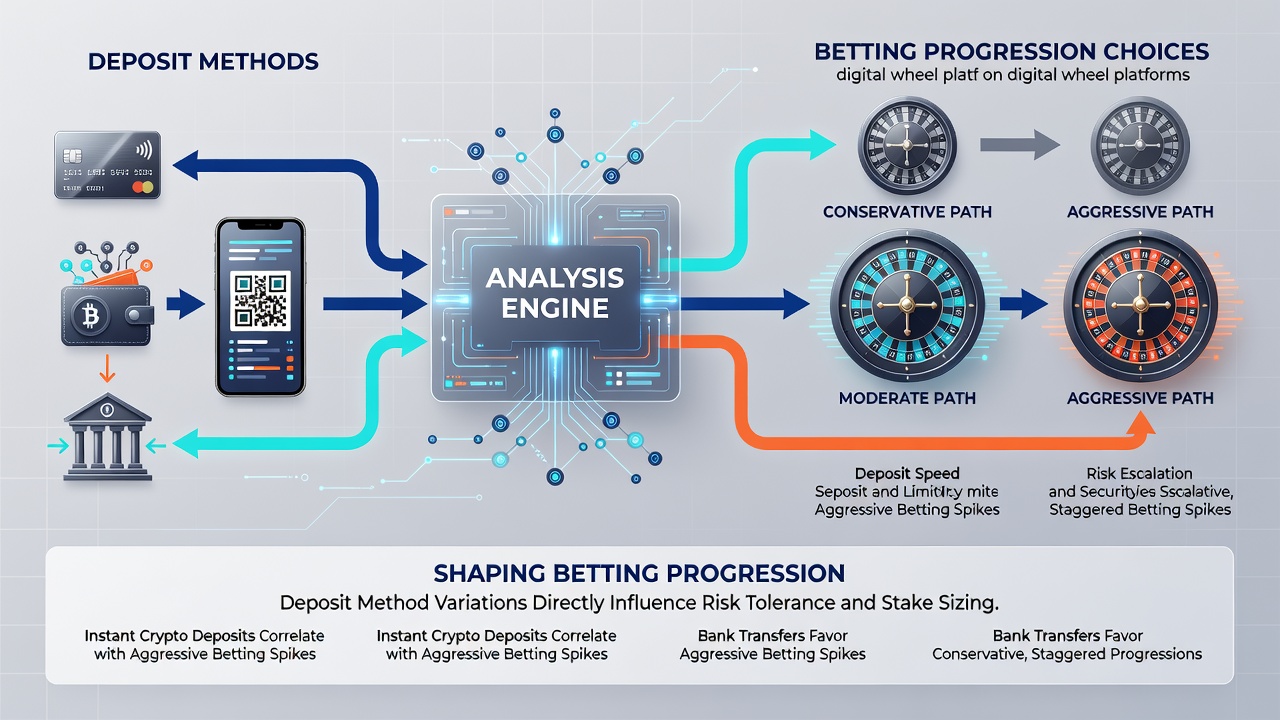
Payment ceilings built into certain methods also steer choices. Many e-wallet providers cap single transactions at fixed thresholds, which compels users to plan multi-deposit progressions in advance rather than reacting to wheel outcomes in real time. Observers tracking session data across European platforms note that this structural limit reduces the incidence of extended doubling runs, because players cannot instantly access the full amount required for the next step without triggering additional verification layers. Those constraints produce shorter overall session lengths compared with unrestricted methods.
Yet the same platforms report that cryptocurrency deposits, which typically carry higher ceilings and lower fees, correlate with longer progression chains that span multiple wheel cycles. Because these deposits clear without intermediary holds, users maintain continuous momentum through sequences that would otherwise stall during processing delays. Industry reports compiled after regulatory updates in late 2026 highlight this distinction as a measurable factor in how different funding rails influence stake escalation rates.
Platform Adaptations and User Response
Operators respond to these behaviors by embedding deposit-type filters into their analytics dashboards, which then surface tailored game variants to each cohort. Players arriving via slower methods encounter more low-volatility wheel options, whereas instant-funding users see standard and high-volatility variants promoted more prominently. This segmentation emerges directly from observed correlations between funding speed and betting aggression, rather than from any prescriptive design choice.
Additional layers appear when loyalty programs tie bonus releases to specific payment rails. Users who select methods with built-in spending caps receive smaller incremental bonuses that align with conservative progression, while those using uncapped rails unlock larger reload amounts that support extended recovery sequences. The result is a self-reinforcing system where deposit method and betting pattern become increasingly linked over repeated sessions.
Conclusion
Deposit method variations continue to steer betting progression decisions across digital wheel platforms through measurable differences in speed, limits, and platform feedback mechanisms. Data collected through November 2026 demonstrates consistent regional patterns that tie funding characteristics directly to how users structure their stake sequences, without requiring subjective interpretation of player intent. These structural influences remain visible in aggregated platform statistics and regulatory filings from multiple jurisdictions.